
Author: Mainkore
-

Black Friday advertising strategy: what happens to your media decisions at peak
On Black Friday, the market moves by the hour while many media teams still decide on a daily or weekly cycle. Competition for inventory intensifies, prices shift, and a budget that was right on Wednesday can be wrong by Friday morning. A good Black Friday strategy decides the limits before the peak, leaves allocation to decisions made while it’s happening, and measures the result afterwards by incremental impact, not only by platform-reported sales. In 2026, Black Friday falls on November 27 and Cyber Monday on November 30. Why Black Friday breaks the usual review cycle Black Friday compresses weeks of…
-

Programmatic advertising transparency: what an advertiser should actually be able to audit
Programmatic advertising transparency usually means one thing: knowing where the money goes. How much reaches the publisher, how much stays with intermediaries, which fees apply along the supply chain. That question matters, and the industry has made measurable progress on it. But it is only half of transparency. Cost transparency tells you where your budget went. It doesn’t tell you what you got for it, how that result was measured, or who answers for it if it falls short. Full transparency starts before the campaign runs: an agreed objective, a committed KPI, a clear way to measure it and explicit…
-
Transparencia en publicidad programática: qué debería poder auditar un anunciante
Cuando se habla de transparencia en publicidad programática, casi siempre se habla de lo mismo: saber adónde va el dinero. Cuánto llega al medio, cuánto se queda por el camino, qué comisiones cobra cada intermediario. Es una pregunta importante y el sector ha logrado avances medibles en ella. Pero es solo la mitad. La transparencia de costes te dice en qué se ha gastado el presupuesto. No te dice qué has conseguido con él, cómo se ha medido ni quién responde si no llega. La transparencia completa empieza antes de lanzar la campaña: un objetivo acordado, un KPI comprometido, una…
-
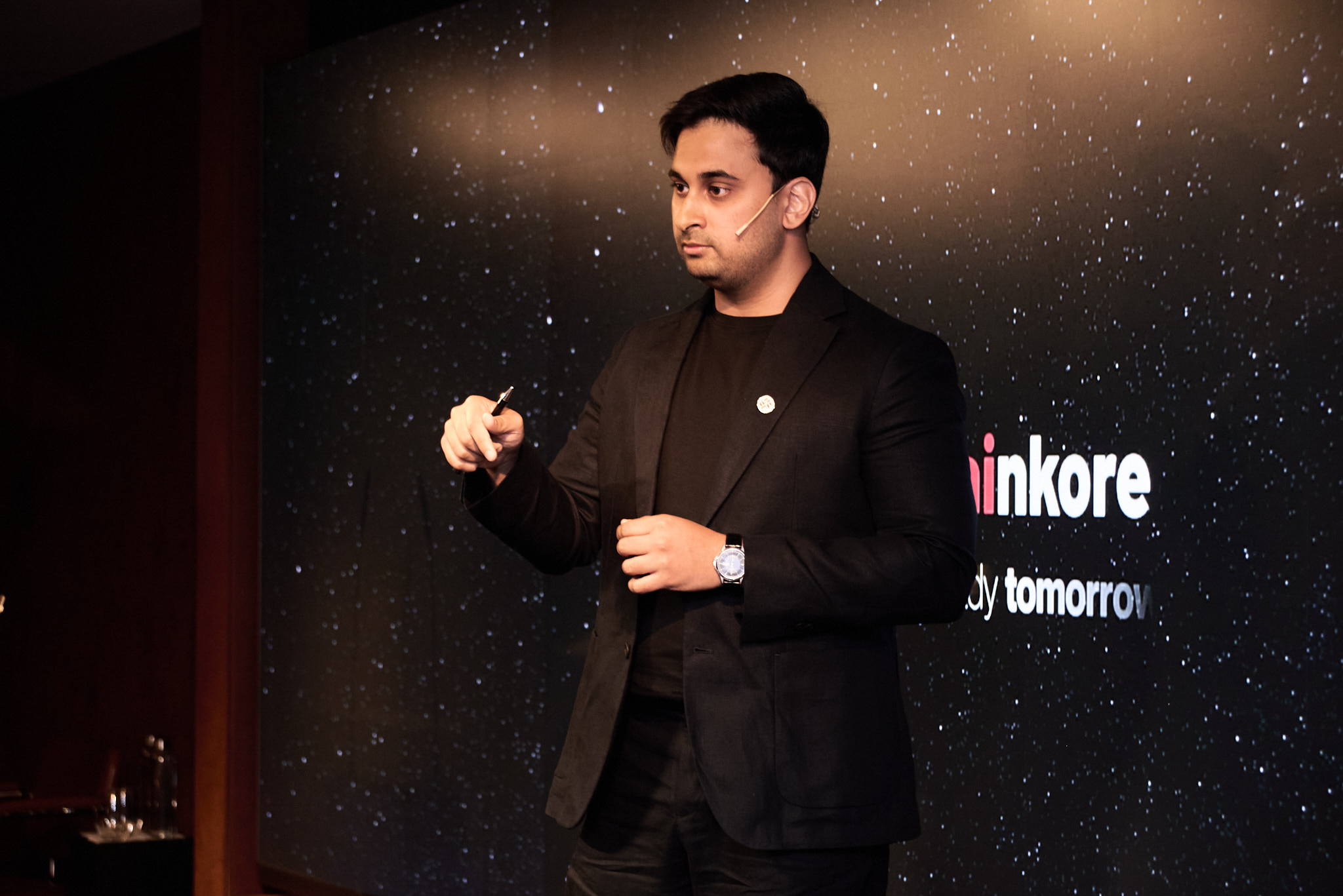
What not to build, and how we test what we did
Most of what I hear about AI in advertising falls into two buckets. A smarter bidder inside one channel. Or an agent with the keys to your ad accounts, trying things to see what sticks. When we started building Mainkore, the first decision was what not to build. The obvious move is to put an LLM on top of ad accounts. We didn’t. LLMs are great with language. Media buying is a long chain of decisions under a budget, with feedback that comes late and is measured in results. Knowing the next likely word won’t tell you what to pay…
-

Cómo comparar plataformas de media buying sin comparar la capa equivocada
Antes de comparar plataformas de media buying, comprueba que trabajan en la misma capa. Los DSPs y las plataformas publicitarias son capas de ejecución: compran inventario dentro de los entornos a los que están conectados. Una capa de decisión autónoma trabaja por encima de ellos y decide entre todos. Meter ambas en la misma tabla de funcionalidades mezcla dos trabajos distintos y lleva a una lista de candidatos que responde a la pregunta equivocada. Capa de ejecución frente a capa de decisión en media buying La tecnología de media buying trabaja en dos capas: la de ejecución, que compra dentro…
-
How to compare media buying platforms without comparing the wrong layer
Before comparing media buying platforms, check that they work at the same layer. DSPs and ad platforms are execution layers: they buy inventory inside the environments they’re connected to. An autonomous decision layer works above them and decides across all of them. Putting both in the same feature matrix mixes two different jobs, and leads to a shortlist that answers the wrong question. Execution layer vs decision layer in media buying Media buying technology works at two layers: the execution layer, which buys inside a platform, and the decision layer, which decides how budget and bids should be distributed across…
-

Varios modelos de media buying a la vez: quién es responsable de cada decisión
Muchas marcas no usan un único modelo de media buying: combinan un equipo interno, una agencia y ejecución programática o autónoma al mismo tiempo. No es un problema de transición que se resuelva pasando de un modelo al siguiente. El riesgo real es que nadie haya definido qué capa es responsable de cada decisión, y que las reglas se contradigan, algunas decisiones se tomen dos veces y otras no se tomen nunca. Por qué los modelos de media buying conviven en lugar de sustituirse Los modelos de media buying conviven porque cada uno aporta algo que los demás no tienen,…
-
Running several media buying models at once: who owns each decision
Many brands don’t use a single media buying model: they run an in-house team, an agency and programmatic or autonomous execution at the same time. That isn’t a transition problem to be solved by migrating from one model to the next. The real risk is that nobody has defined which layer owns which decision, so rules contradict each other and some decisions get made twice while others aren’t made at all. Why media buying models coexist instead of replacing each other Media buying models coexist because each one holds something the others don’t, so replacing one with another usually means…
-

¿La IA autónoma sustituye a tu agencia de medios?
No. La IA autónoma asume las decisiones de ejecución que siempre fueron mecánicas, aunque las tomara una persona: las pujas, los movimientos de presupuesto entre canales, pausar una creatividad que ha dejado de funcionar. La agencia se queda con el trabajo que necesita un contexto que un sistema nunca recibe: la estrategia, el criterio de marca, la negociación con los medios y la definición de los límites dentro de los que trabaja el sistema. Lo que cambia es en qué invierte su tiempo la agencia y cómo debería medirse su valor. Qué asume la IA autónoma del trabajo de la…
-
Does autonomous AI replace your media agency?
No. Autonomous AI takes over the execution decisions that were always mechanical, even when a person made them: bids, budget shifts between channels, pausing a creative that stopped working. The agency keeps the work that needs context a system is never given: strategy, brand judgment, media negotiation, and setting the boundaries the system operates within. What changes is where agency time goes, and how its value should be measured. What autonomous AI takes over from the agency Autonomous AI takes over the layer of execution decisions that follow rules and signals, and that were limited by review cycles rather than…