
Category: Media performance
-

Ad creative fatigue: how to detect it before CTR tells you
Ad creative fatigue is the drop in response that happens when an audience has seen the same ad too many times. It usually shows up late in the metrics teams watch most, like CTR, because by the time the click rate falls, frequency has been too high for a while. The earliest signals are rising frequency, rising cost per result at stable budget and falling engagement among people who’ve already been reached, and the biggest blind spot is frequency across channels, which no single platform can see. What ad creative fatigue is Creative fatigue is a response problem, not a…
-

Signal loss in advertising: what happens to media decisions when data disappears
Signal loss in advertising is the reduction in the user-level data that targeting, measurement and optimization used to depend on, driven by privacy regulation, consent requirements and browser and operating system restrictions. It doesn’t stop media decisions, it changes what they can be based on. Decisions that relied on tracking one user across sites become less reliable, and decisions that combine many aggregated and first-party signals become more important. Where advertising signals are disappearing Signals are being lost in three places: at the device level, at the browser level and at the consent level. On iOS, Apple’s App Tracking Transparency,…
-

Incrementality in advertising: what it measures and why attribution can’t show it
Incrementality is the part of a result that happened because of the advertising, and wouldn’t have happened without it. It’s measured by comparing what happened with the ads against what would have happened without them, usually with a test group and a control group. Platform attribution can’t show incrementality on its own, because it credits conversions that occurred after an ad, not conversions that occurred because of it. What incrementality means in advertising Incrementality answers one question: how much of this result would have been lost if we hadn’t run the campaign? A customer who was already going to buy,…
-

Why platform-reported ROAS doesn’t match your real KPI
Platform-reported ROAS rarely matches your real business KPI because each ad platform measures the conversions it can see and attributes them to itself. When several platforms reach the same customer, each can claim the same sale, so the sum of reported results can exceed what actually happened. The number to manage the business with is the one measured on your side, against your own sales or leads, not the sum of what each platform says. Why ad platforms report more conversions than you had Ad platforms tend to over-report in total because each one attributes conversions from its own point…
-

Black Friday advertising strategy: what happens to your media decisions at peak
On Black Friday, the market moves by the hour while many media teams still decide on a daily or weekly cycle. Competition for inventory intensifies, prices shift, and a budget that was right on Wednesday can be wrong by Friday morning. A good Black Friday strategy decides the limits before the peak, leaves allocation to decisions made while it’s happening, and measures the result afterwards by incremental impact, not only by platform-reported sales. In 2026, Black Friday falls on November 27 and Cyber Monday on November 30. Why Black Friday breaks the usual review cycle Black Friday compresses weeks of…
-

Performance guarantee vs performance target in media buying: who carries the risk
A performance target is a result the provider projects and will try to reach. A performance guarantee is a result written into the contract, with a defined consequence if it isn’t met. The difference comes down to who carries the risk when the number is missed: with a target, the advertiser absorbs the gap, and with a guarantee, the provider does. The difference between a performance target and a performance guarantee A performance target is a best-effort projection, while a performance guarantee is a contractual commitment with a remedy attached. The two are easy to confuse because they’re often described…
-
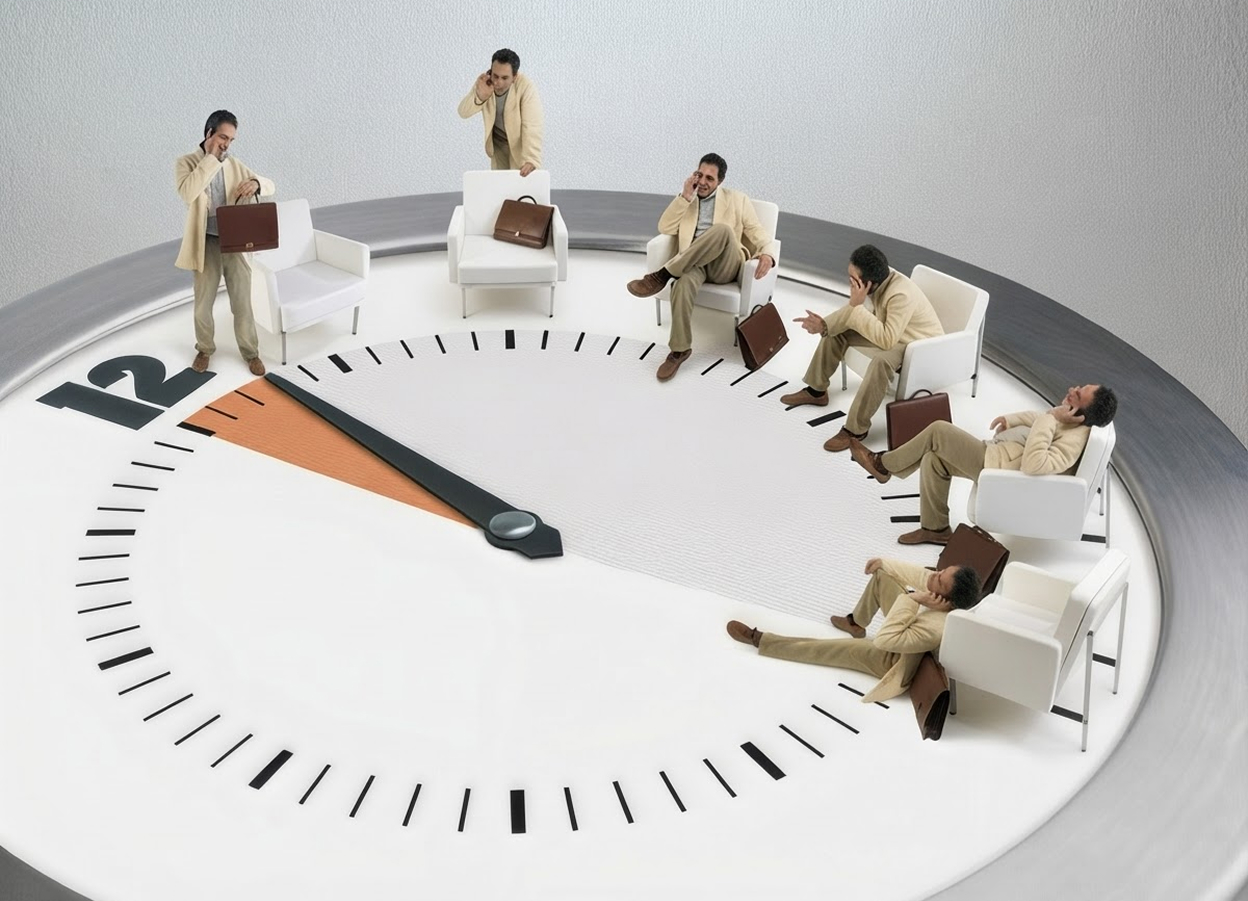
How often does your media buying actually optimize?
Media buying optimizes as often as it’s actually re-evaluated, which is often the human review cycle, weekly or monthly, rather than the real-time capability of the tools involved. Optimization frequency is how often a system really re-evaluates and changes what it’s doing. It’s a different claim from what the system is capable of, and the gap between the two is where performance quietly leaks. Optimization capability vs optimization frequency Optimization capability is what a system can technically do. Optimization frequency is what it actually does, on an ordinary day, without anyone prompting it. “Continuous optimization” is a common phrase in…
-

Guaranteed results in digital advertising: what it really means
A results guarantee in digital advertising is a contractual commitment to a specific KPI, measured in an agreed way, with a defined consequence for the provider if the campaign doesn’t meet it. Many offers sold as “guaranteed results” don’t meet that definition. They guarantee activity, delivery, a price per unit or a target. That reduces some uncertainty, but the risk of the business outcome stays with the advertiser. The practical test takes one question: if the result doesn’t arrive, who loses something? If the answer is only the advertiser, it isn’t a results guarantee. In this article 1. What “guaranteed…
-

Back to business: consumption, demand and competition peak
The numbers behind back to business Back to business spending reaches an average of 425 euros per household, 13.3% more than the previous cycle. Searches related to the return to routine multiply by 4.3, with 31% more purchase intent than the year before. 52% of that search activity starts on a smartphone, and the journey moves fluidly from phone, to search, to social, to marketplace, to physical store. None of this is gradual. It’s a spike, concentrated in a few weeks, across nearly every category at once. Eight sectors, one shared problem Retail, fashion, technology, food, telecom, automotive, banking and…
-

Guaranteed KPIs. Here’s the logic that makes it possible.
Why guaranteed results didn’t exist A guaranteed outcome requires controlling the variables that determine it. In advertising, those variables were always distributed: platforms controlled their own inventory, agencies controlled their own process, and the space between them belonged to nobody. So the risk stayed with the client. Not because the industry was dishonest — because the architecture to back a real guarantee didn’t exist. Projections, targets, benchmarks, best-efforts commitments: these weren’t evasions. They were the honest upper bound of what any system could promise when it couldn’t control what produced the result. What controlling the variables actually requires Speed: decisions…